PRESIDENT'S MESSAGE
ABOUT IGFA
HEADQUARTERS
TRUSTEES
INTERNATIONAL REPS
ANNUAL REPORT
HISTORY
AD OPPORTUNITIES
HALL OF FAME
LIBRARY
IGFA TALK FORUM
DONOR OPPORTUNITIES
CAREER OPPORTUNITIES
FAQ
|
History
Before 1939 there was no universal
code of sporting ethics to guide ocean anglers in their pursuits. Some
rules pertaining to sporting conduct were in effect at certain well-established
fishing clubs but they varied according to the dictates of each club.
The idea of a worldwide association of marine anglers had been brewing
for some time in England, Australia, and the United States, and the first
steps in this direction were taken in the late 1930’s by members
of the British Tunny Club who hoped to establish headquarters in England
to formulate rules for ethical engling. The threat of war, however, interrupted
their plans.
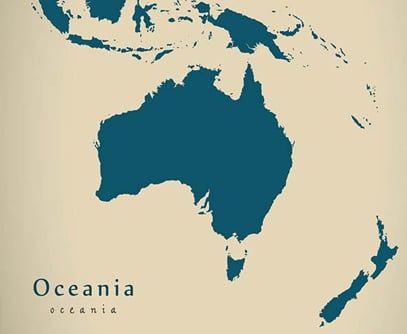
At that same time, Michael Lerner was organizing a fishing expedition
to the waters of Australia and New Zealand in conjunction with the American
Museum of Natural History in New York. He heard of the British Tunny Club’s
plans, and when he arrived in Australia he looked up one of the country’s
finest anglers, Clive Firth, to discuss the idea with him. Firth was well
aware of the angling feats of Californians, Floridians, Long Islanders
and others. He felt that England and her colonies would accept American
judgement as sporting and impartial, and that Americans should be the
ones to devise and administer these ethical angling rules.
Dr. William King Gregory, head of the Departments of Ichthyology and Comparative
Anatomy at the American Museum of Natural History, also was a member of
the Australia-New Zealand expedition. He was particularly enthusiastic
about the idea of a worldwide sport fishing association headquartered
in the United States, and immediately suggested that it might be possible
to affiliate such an organization with the Museum. His interest in such
an association and the information it could provide to scientists was
the beginning of IGFA’s lasting connection with scientists and scientific
institutions.
When the members of the Australia-New Zealand expedition returned to the
U. S., letters were written to outstanding anglers, fishing clubs, and
tackle manufacturers soliciting their opinions
regarding the formation of an international association of marine angling
clubs. The response was highly favorable and on June 7, 1939, the International
Game Fish Association was formally launched in a meeting held at the American
Museum of Natural History. Present were William King Gregory (who became
the first president of the association), Michael Lerner, angler/writer
Van Campen Heilner, and Francesca LaMonte, Associate Curator of Fishes
for the Museum and science leader of several of the Lerner expeditions.
Another immediate task was to notify scientific institutions and fishing
clubs throughout the world about IGFA, its activities and intentions.
By January 1940, only a few months after that first meeting, there were
two associated scientific institutions, 10 member clubs, and 12 overseas
representatives. By 1948, the numbers had grown to 10 scientific institutions,
80 member clubs, and IGFA representatives in 41 areas of the world. Clive
Firth of Australia was elected IGFA’s first overseas representative,
and others were chosen in Nigeria, New Zealand, Bermuda, the Bahamas,
Chile, Costa Rica, the Canal Zone, Cuba, Hawaii, Mexico and Puerto Rico.
Among the first associated clubs were the Catalina Tuna Club, Miami Beach
Rod and Reel Club, Cape Breton Big Game Anglers Association, Long Island
Tuna Club, Atlantic City Tuna Club, Freeport Tuna Club, and Beach Haven
Tuna Club.
As news of the IGFA spread, other noted sportsmen and scientists were
drawn to its administration. Among the early officers were Ernest Hemingway,
Philip Wylie, B. David Crowninshield, and Charles M. Breder, Jr., who
served as Chairman of the Committee on Scientific Activities.
Michael Lerner financed the operations of the International Game Fish
Association from its inception, and when Dr. Gregory retired from the
Museum staff in 1944, Lerner took over responsibility for the IGFA presidency
as well. Since then, William K. Carpenter, Elwood K. Harry, Michael Leech,
and Rob Kramer have served as IGFA presidents. The physical location of
IGFA headquarters changed as well through the last six decades: in the
late 1950s IGFA moved from New York to Florida, first to Miami, then in
1967 to Fort Lauderdale, in 1992 to Pompano Beach, and in 1999 to the
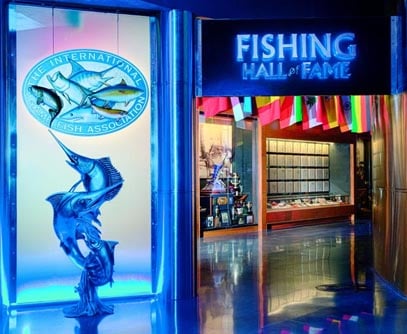
IGFA Fishing Hall of Fame & Museum in Dania Beach.
However, two of the most significant events affecting the association
since 1939 occurred in the
1970s. Early in that decade E. K. Harry, then IGFA vice president, proposed
opening the organization to individual membership to insure its continued
funding, unify international anglers, and inform a much larger audience
of the problems threatening fishery resources. Then, in 1978, Field &
Stream magazine officially turned over its record-keeping responsibilities
to IGFA. Thus the membership-driven organization that IGFA is today, responsible
for all saltwater and freshwater world records and for spreading awareness
of fishery and conservation issues to fishermen around the world, was
formed.
|